Dark rear windows are now common on many modern vehicles, especially SUVs, executive cars and higher-specification models. At first glance, factory privacy glass and aftermarket window film can look very similar.
They are not the same thing.
Factory tinted glass is created as part of the vehicle’s original glazing, while aftermarket car tint is normally added as a separate film applied to existing glass.
Both can change the appearance of a vehicle and improve privacy, but their construction, performance and flexibility can be different.
If you are deciding whether your existing privacy glass is enough or whether professional film is worth adding, this guide explains the key differences.
What Is Factory Tinted Glass?
Factory tinted glass is produced with darker colouring built into the glass itself.
It is commonly found on rear passenger windows and rear windscreens.
Because the colour is part of the glass, it does not rely on an added film layer to create the darker appearance.
Factory privacy glass is often fitted for styling and privacy. It can make the rear of a vehicle look more refined while making it harder to see directly into the cabin during daylight.
However, the exact performance varies between manufacturers and vehicles.
A dark appearance alone does not tell you how well the glass manages heat or ultraviolet exposure.
What Is Aftermarket Window Tint?
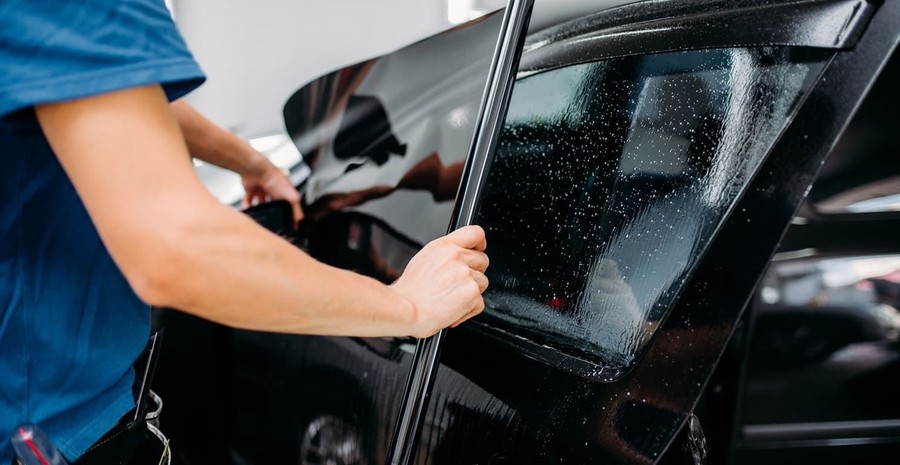
Aftermarket tint usually involves applying a specialist film to the inside surface of existing vehicle glass.
The film can be selected according to the owner’s priorities.
Depending on the product, these may include:
- Increased privacy
- Heat reduction
- Glare reduction
- UV protection
- A darker appearance
- A more consistent finish across multiple windows
This flexibility is one of the main differences between aftermarket film and factory privacy glass.
Instead of accepting the specification supplied with the vehicle, the owner can choose a film based on the appearance and performance they want.
Is Factory Privacy Glass the Same as Window Film?
No.
They may look similar from outside, but their construction is different.
Factory privacy glass gets its darker appearance from the glass itself.
Aftermarket tint adds a separate film to the existing window.
This distinction matters because a specialist automotive film can be designed to provide particular performance characteristics beyond privacy alone.
For example, some films focus strongly on solar heat rejection or UV protection while maintaining a relatively subtle appearance.
That means two windows can look equally dark but perform very differently.
Which Option Provides Better Privacy?
Both options can improve privacy.
Dark factory glass makes it harder to see into the rear passenger area, particularly during daylight.
Aftermarket film can do the same, but it offers more choice in terms of shade.
This can be useful if the original privacy glass is lighter than you would prefer.
However, no tint should be treated as a complete security solution.
Lighting conditions affect privacy.
At night, especially if the interior lights are switched on, objects and passengers may become more visible from outside.
Valuables should still be kept out of sight when the vehicle is parked.
Which Is Better for Heat Reduction?
This depends on the actual glass and film being compared.
A darker factory window does not automatically mean it rejects more heat than a lighter aftermarket film.
Heat performance depends on how the product manages solar energy.
Some modern automotive films are specifically engineered to improve solar control.
This means drivers interested in cabin temperature should compare technical performance rather than appearance alone.
Ask about the heat-rejection characteristics of the product being installed.
That gives you more useful information than simply asking how dark the film will look.
What About UV Protection?
Ultraviolet protection is another area where appearance can be misleading.
A very dark window does not automatically provide the strongest UV performance.
Specialist films can be designed to reduce a high proportion of UV exposure without needing to look extremely dark.
This can be useful for drivers who want to help protect:
- Seats
- Dashboards
- Interior trim
- Upholstery
- Rear passengers
Repeated sunlight can contribute to fading and deterioration over time, so UV performance may be worth considering even if privacy is not your main concern.
Can You Add Tint Over Factory Privacy Glass?
In many cases, yes.
Aftermarket film can be installed over existing factory privacy glass, particularly on rear windows.
This allows drivers to increase privacy or improve performance without replacing the glass.
However, the final appearance can become much darker because the film is working together with glass that already reduces visible light.
This is why the existing glass should be assessed before choosing a film.
The same principle is particularly important for front windows, where legal light-transmission limits apply.
Will Adding Film Make Factory Glass Too Dark?
On rear passenger windows, drivers have much more flexibility under general UK tint rules.
The front windows are different.
For most modern vehicles, the front windscreen must allow at least 75% of visible light through and the front side windows at least 70%.
This means additional film on front glass requires careful consideration.
The legal limit applies to the finished window, not simply to the film.
If the original glass already reduces visible light, adding another layer may take it below the permitted level.
Professional assessment is therefore important.
Can Aftermarket Tint Be Removed?
Yes.
One advantage of film is that it can normally be removed.
This gives vehicle owners flexibility if they later want a different shade, sell the car or decide to return the glass closer to its original appearance.
Removal should still be carried out carefully.
Poor techniques can leave adhesive behind or cause problems around heated rear-window elements.
Professional removal is usually the safer option.
Factory tinted glass is different because the darker appearance is part of the glass itself.
It cannot simply be peeled away.
Which Option Looks Better?
This is mostly a matter of preference.
Factory privacy glass often has a clean, integrated appearance because it was designed as part of the vehicle.
Aftermarket film can also look very close to a factory finish when professionally installed.
It also allows more control over shade and consistency.
For example, somebody may want to darken rear windows further or create a more uniform appearance across glass that currently looks mismatched.
The quality of installation plays a major role.
Poorly fitted film can show bubbles, contamination, lifting edges or uneven sections.
A professional installation should look smooth and consistent.
Is Aftermarket Tint Worth It If You Already Have Privacy Glass?
It can be.
The decision depends on what your existing glass already provides and what you want to improve.
Additional film may make sense if you want:
- More privacy
- Better solar performance
- Greater UV protection
- Reduced glare
- A darker appearance
- A more uniform finish
If the factory glass already meets your needs, adding film purely for the sake of having tint may not provide much value.
The better approach is to identify the problem you want to solve first.
What Should You Ask Before Booking?
If you are searching for car tinting near me, compare installers based on more than price.
Useful questions include:
- What type of film do you use?
- What heat-rejection performance does it offer?
- How much UV does it block?
- What shade options are available?
- Can it be installed over factory privacy glass?
- Is the film covered by a warranty?
- Will you assess the existing glass first?
- How do you make sure front windows remain legal?
Clear answers to these questions make it easier to compare actual value rather than simply choosing the cheapest quote.
Factory Tint vs Aftermarket Film: Which Should You Choose?
Factory privacy glass is convenient, durable and integrated into the vehicle from the start.
Aftermarket film offers greater flexibility.
It can allow drivers to change the appearance, increase privacy or select a product designed around specific performance goals.
Neither option is automatically better.
If privacy is already sufficient and you are happy with the appearance, factory glass may be enough.
If you want more control over heat, UV protection, glare or shade, a specialist film may offer advantages.
Global Tint UK can help assess existing vehicle glass and recommend suitable film options based on how the car is used and what the owner wants to achieve.
The important thing is to look beyond darkness alone. The best choice is the one that balances appearance, comfort, privacy, performance and legal compliance.