Key Highlights
- High-strength materials in vehicles improve safety but are significantly harder to machine accurately.
- Excessive heat generation is a primary concern when cutting through toughened alloys and steels.
- Modern workshops use an advanced CNC machining centre to manage vibration and maintain tight tolerances.
- Tool wear increases rapidly when working with automotive materials designed for extreme durability.
Introduction
The automotive industry is in a state of constant evolution, driven by the dual goals of increasing passenger safety and improving fuel efficiency. That said, to achieve these objectives, manufacturers are increasingly turning to advanced materials like high-strength steel, titanium, and specialised aluminium alloys. While these materials allow for lighter and stronger vehicle frames, they present a unique set of obstacles during the production process. Using a standard CNC machine for the automotive industry requires a deep understanding of how these metals behave under pressure. Unlike softer metals, high-strength materials resist cutting, causing increased stress on both the machinery and the cutting tools. Overcoming these hurdles is essential for maintaining production speeds without sacrificing the quality of the final component.
1. Rapid Tool Wear and Degradation
One of the most significant challenges when working with high-strength automotive materials is the accelerated rate of tool wear. Steels designed to withstand high impacts are naturally abrasive and resistant to deformation. Once a cutting tool engages with these surfaces, the friction generated can quickly dull the sharp edges of the drill or mill. This situation leads to a decrease in dimensional accuracy and a poor surface finish on the part.
Engineers must then carefully select tool coatings, such as titanium aluminium nitride, which provide a protective barrier against heat and abrasion, to combat this situation. Additionally, using a rigid CNC machining centre is vital to ensure that the tool remains stable. Any slight wobble or deflection caused by a worn tool can lead to a scrapped part, which is costly when working with expensive automotive alloys. Constant monitoring of tool life and the use of automated tool changers are necessary strategies to keep the production line moving efficiently while maintaining the integrity of the components.
2. Excessive Heat Management
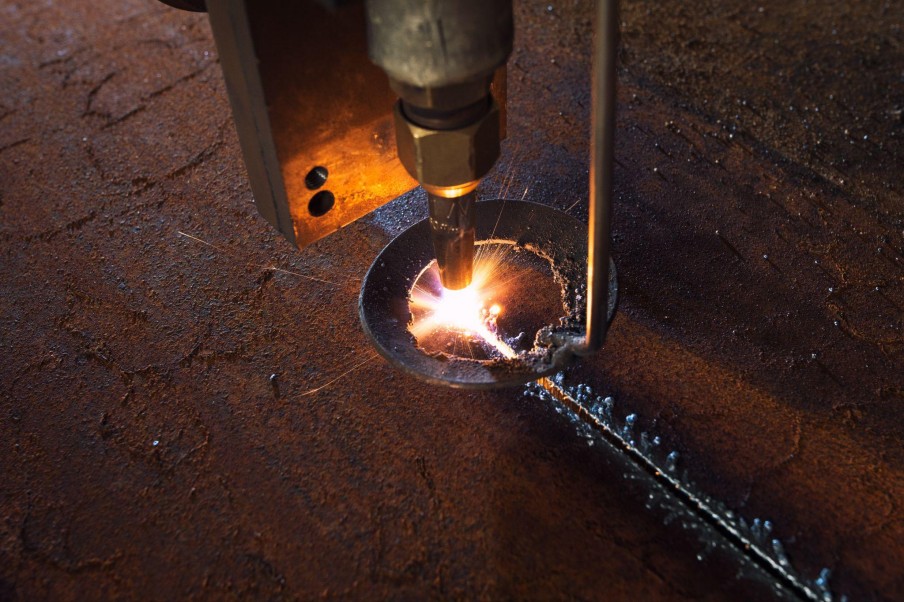
Machining high-strength materials generates a massive amount of thermal energy. Since these materials are designed to be tough, they do not dissipate heat as quickly as standard metals. This heat can build up at the point of contact between the tool and the workpiece, leading to thermal expansion. If the part expands during the cutting process, the final dimensions will be incorrect once the material cools down and shrinks back to its original state.
Furthermore, extreme heat can change the physical properties of the metal itself, potentially creating “hard spots” or making the material more brittle. A high-quality CNC machine for the automotive industry must be equipped with advanced cooling systems. High-pressure coolant is often sprayed directly onto the cutting zone to wash away chips and keep temperatures under control. This approach not only protects the workpiece but also helps to extend the life of the cutting tools, ensuring that the manufacturing process remains predictable and repeatable.
3. Vibration and Surface Integrity
High-strength materials require greater cutting forces, which in turn increases the likelihood of vibration, often referred to as “chatter.” Vibration is the enemy of precision; it leaves visible marks on the surface of the part and can even lead to micro-cracks in the material. However, for critical automotive components like engine blocks or transmission gears, any surface imperfection can lead to premature failure once the vehicle is in use.
Manufacturers utilise a heavy-duty CNC machining centre that features high structural rigidity and damping capabilities to minimise this risk. After all, by securing the workpiece firmly and using optimised spindle speeds, technicians can reduce the harmonics that cause vibration. Achieving a smooth surface finish is not just about aesthetics; it is a functional requirement. Remember, in the automotive world, smooth surfaces reduce friction between moving parts, which is essential for the longevity and efficiency of the vehicle’s internal systems.
4. Chip Control and Removal
When machining softer materials, the metal chips often curl and break away easily. However, high-strength automotive alloys often produce long, stringy chips that can wrap around the spindle or the cutting tool. These “bird’s nests” can scratch the finished surface of the part or, in worst-case scenarios, cause the machine to jam and break the tooling.
Proper chip management is a constant struggle in the production of automotive parts. Sophisticated CNC machine setups for the automotive industry incorporate specific “chip breaker” geometries on the cutting tools to force the waste material to snap into smaller, manageable pieces. Using high-pressure through-spindle coolant also helps to flush these chips away from the work area instantly. Efficient chip removal is crucial for maintaining a clean cutting environment and preventing the re-cutting of waste material, which would otherwise lead to increased heat and tool damage.
Conclusion
The move toward stronger, lighter materials is essential for the future of the automotive sector, particularly as electric vehicles demand higher efficiency. However, these materials require a more sophisticated approach to manufacturing. That said, by understanding the challenges of tool wear, heat, vibration, and chip control, manufacturers can adapt their processes to produce high-quality parts consistently. The integration of advanced machinery and expert programming ensures that even the toughest materials can be shaped into the precision components that keep our vehicles safe and reliable on the road.
Contact Disk Precision Group – Thailand to learn how we can help you overcome your toughest manufacturing challenges.