Key Highlights
- Custom machining allows for the creation of lightweight engine parts that improve vehicle performance.
- Complex transmission gears require extreme precision to ensure smooth shifting and durability.
- High-performance braking systems rely on machined callipers for consistent stopping power.
- Modern automotive CNC machine technology enables the production of bespoke suspension components for better handling.
Introduction
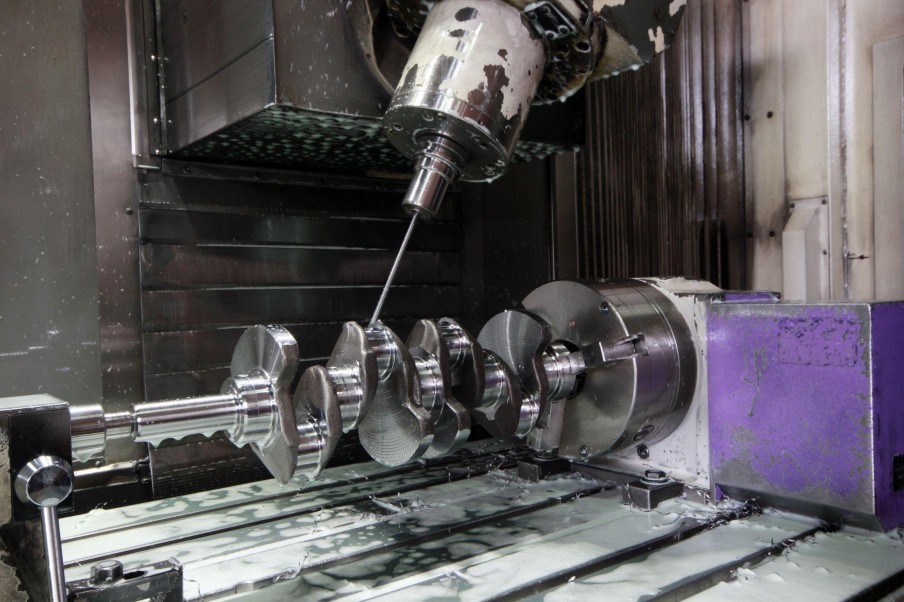
The automotive industry has moved far beyond the days of simple assembly lines and cast-iron parts. Today’s vehicles are high-tech machines that require components with incredibly tight tolerances and complex designs. That said, to achieve this, manufacturers rely heavily on custom CNC machining to produce parts that are both lightweight and exceptionally strong. While mass production still uses traditional methods like casting and forging for some items, the most critical and high-performance components are finished or entirely created through computer-controlled cutting. This technology allows engineers to experiment with new designs and materials, pushing the limits of what a car can do. From the heart of the engine to the safety systems that protect passengers, the precision of a modern workshop is the driving force behind automotive innovation.
1. High-Performance Engine Blocks
The engine block is the core of any vehicle, and in high-performance or luxury cars, these are often produced using custom CNC machining. Unlike standard blocks that are cast in large quantities, custom-machined blocks are often carved from a single billet of high-grade aluminium. This process eliminates the internal porosities and weaknesses that can occur during the casting process, resulting in a much stronger and more reliable engine.
Using an automotive CNC machine, engineers can create intricate cooling galleries and oil passages that would be impossible to achieve with traditional methods. This quality allows for better thermal management, which is essential for engines that run at high speeds or use turbochargers. The precision of the cylinder bores and mating surfaces ensures a perfect seal, which maximises compression and fuel efficiency. Now, for racing teams and boutique manufacturers, this level of customisation is what separates a standard vehicle from a world-class machine.
2. Complex Transmission Gears and Shafts
A vehicle’s transmission is a masterpiece of mechanical engineering, containing dozens of gears and shafts that must mesh perfectly at high speeds. If a single gear tooth is off by even a fraction of a millimetre, it can cause noise, vibration, and eventual mechanical failure. This instance is why custom CNC machining is used to refine these parts to their final dimensions.
The materials used for gears are typically hardened steels that are difficult to cut. Advanced machining centres can handle these tough materials while maintaining the extreme accuracy required for smooth gear transitions. Additionally, by using computer-controlled tools, manufacturers can also create complex “helical” or “double helical” gear patterns that provide more surface contact and quieter operation. This precision is particularly important in electric vehicles, where the lack of engine noise makes any transmission whine much more noticeable to the driver.
3. Precision Brake Callipers
Braking systems are arguably the most important safety feature of any vehicle. High-performance brake callipers are often produced through custom CNC machining to ensure they are both lightweight and incredibly stiff. Once a driver hits the brakes, the calliper must apply even pressure to the pads without flexing. Any flex in the calliper leads to a “spongy” brake feel and reduced stopping power.
An automotive CNC machine can carve callipers into complex shapes that provide maximum strength while removing unnecessary material to reduce unsprung weight. This instance improves the vehicle’s handling and responsiveness. Additionally, machining allows for internal fluid channels to be placed exactly where they are needed for optimal cooling. This quality prevents the brake fluid from boiling during intense driving, ensuring that the brakes remain effective even under the most demanding conditions.
4. Bespoke Suspension Components
The suspension system determines how a car rides and handles. Components like control arms, uprights, and knuckle joints are increasingly being made using custom CNC machining, especially for sports cars and off-road vehicles. These parts need to be strong enough to handle massive loads but light enough to allow the suspension to react quickly to bumps in the road.
Additionally, by machining these parts from solid blocks of aerospace-grade aluminium, manufacturers can achieve a strength-to-weight ratio that casting simply cannot match. Custom machining also allows for easy adjustments to the geometry of the suspension. For example, a racing team can quickly machine a new set of uprights to change the car’s camber or toe settings for a specific track. This level of rapid prototyping and specialised production is essential for staying competitive in the fast-paced world of automotive development.
5. Custom Intake Manifolds
The intake manifold is responsible for distributing air evenly to the engine’s cylinders. A well-designed manifold can significantly increase an engine’s power and efficiency. Through custom CNC machining, engineers can create manifolds with perfectly smooth internal surfaces, which reduces air turbulence and improves flow.
While many standard manifolds are made of plastic or cast metal, high-performance versions are often machined to allow for variable-length runners or custom fuel rail mounts. An automotive CNC machine can produce these complex shapes with absolute consistency, ensuring that every cylinder receives the exact same amount of air. This instance leads to a smoother-running engine and better throttle response. Remember, as automotive designs become more compact, the ability to machine custom manifolds that fit into tight engine bays is a major advantage for designers and engineers alike.
Conclusion
The transition toward more efficient and powerful vehicles is deeply linked to the capabilities of modern machining. Customised production allows for a level of detail and performance that was once reserved for the world of aerospace. Since automotive technology continues to evolve—particularly with the rise of electric and autonomous vehicles—the need for precise, high-strength components will only increase. Remember, by embracing the power of computer-controlled manufacturing, the automotive industry can continue to deliver safer, faster, and more reliable vehicles to drivers around the world.
Contact Disk Precision Group – USA and discover high-end CNC machining services for the automotive sector.